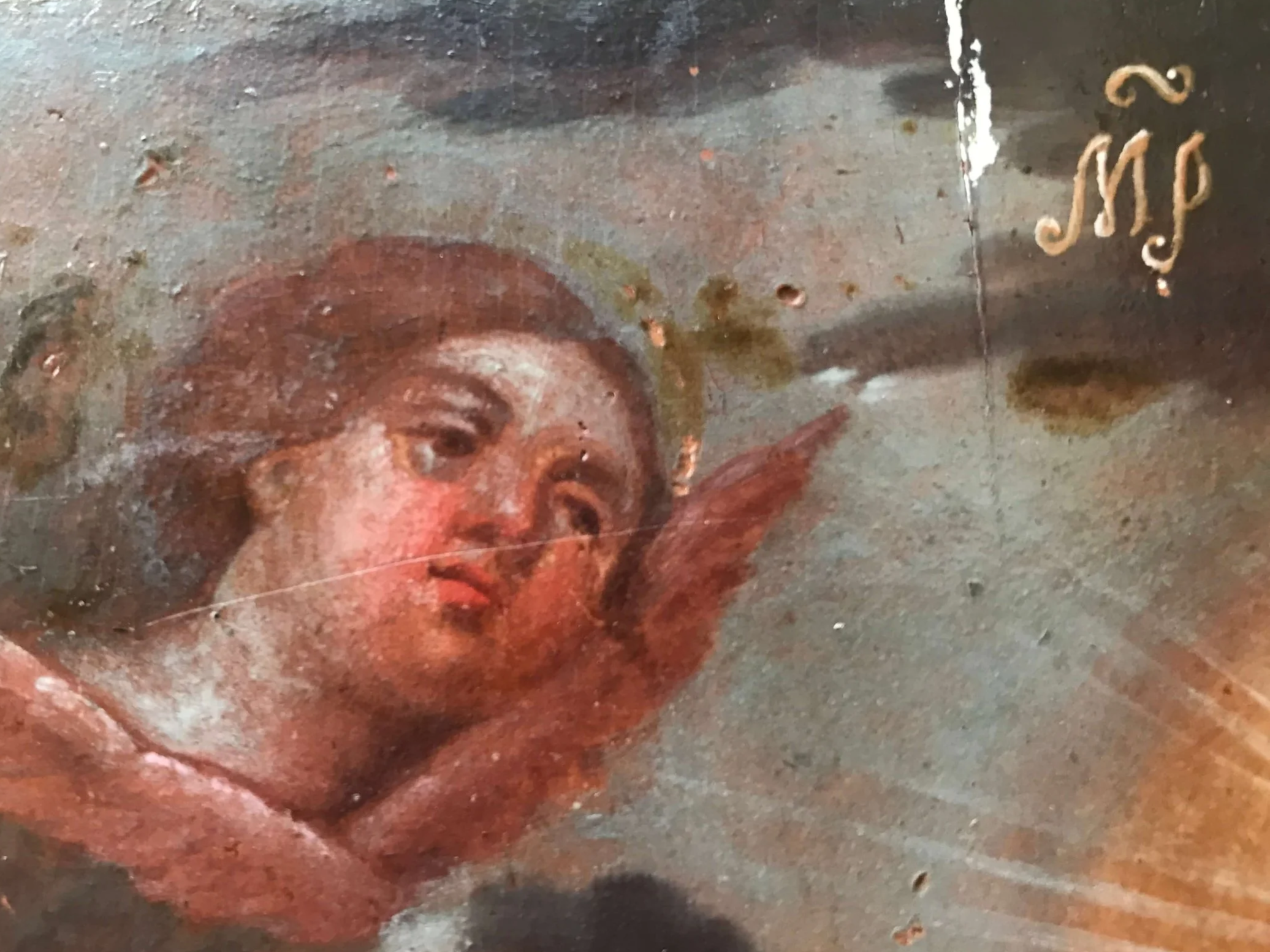
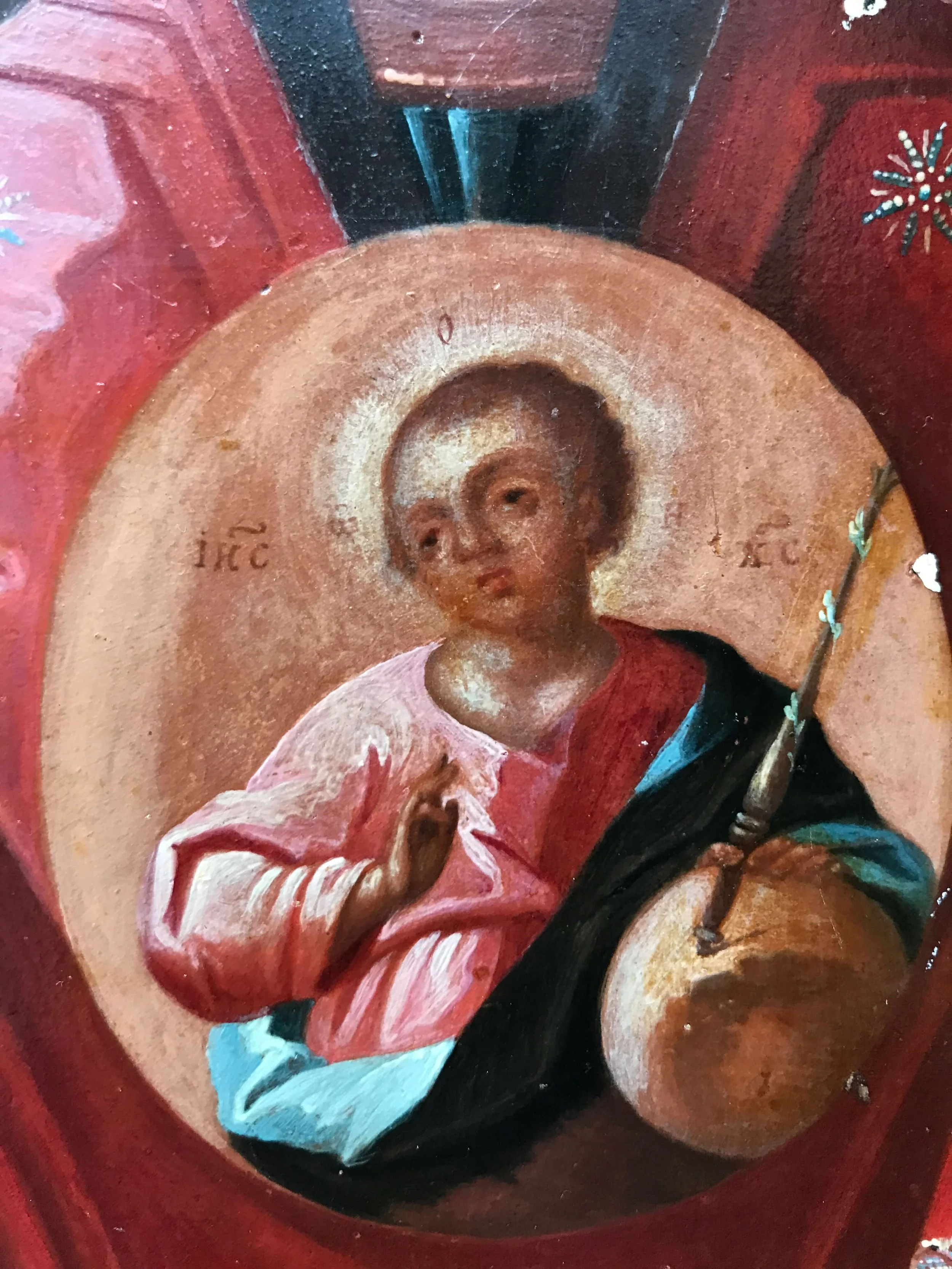
“The Icon of the Mother of God “The Sign””
(Russian: “Знамение Пресвятой Богородицы”)
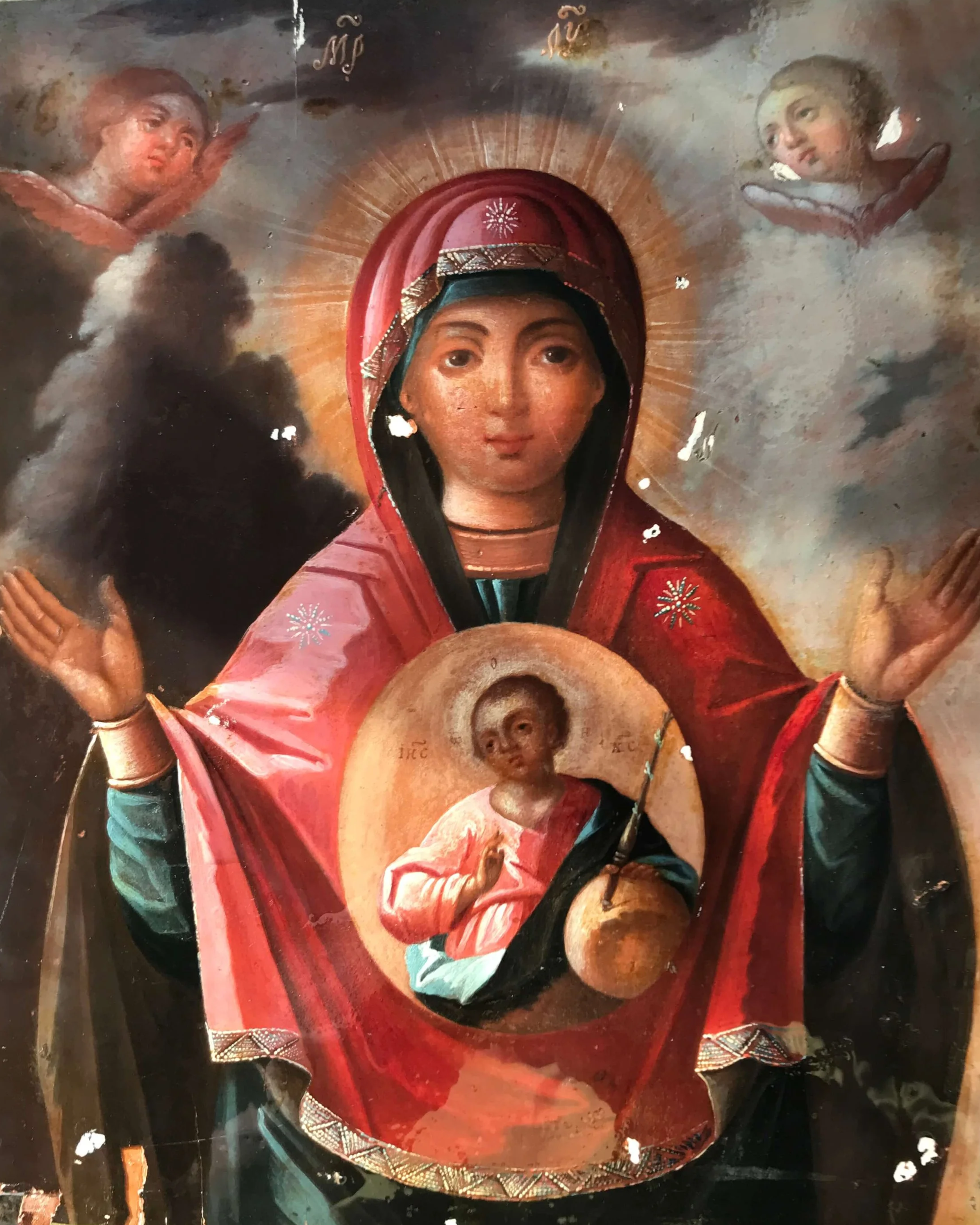
The complete and more theologically and iconographically precise name: ‘The Icon of the Most Holy Mother of God The Sign, of the Oranta iconographic type, with the Christ Child Emmanuel in a medallion.’
(Russian: “Икона Пресвятой Богородицы Знамение, иконографический тип Оранта с Младенцем Эммануилом в медальоне”)
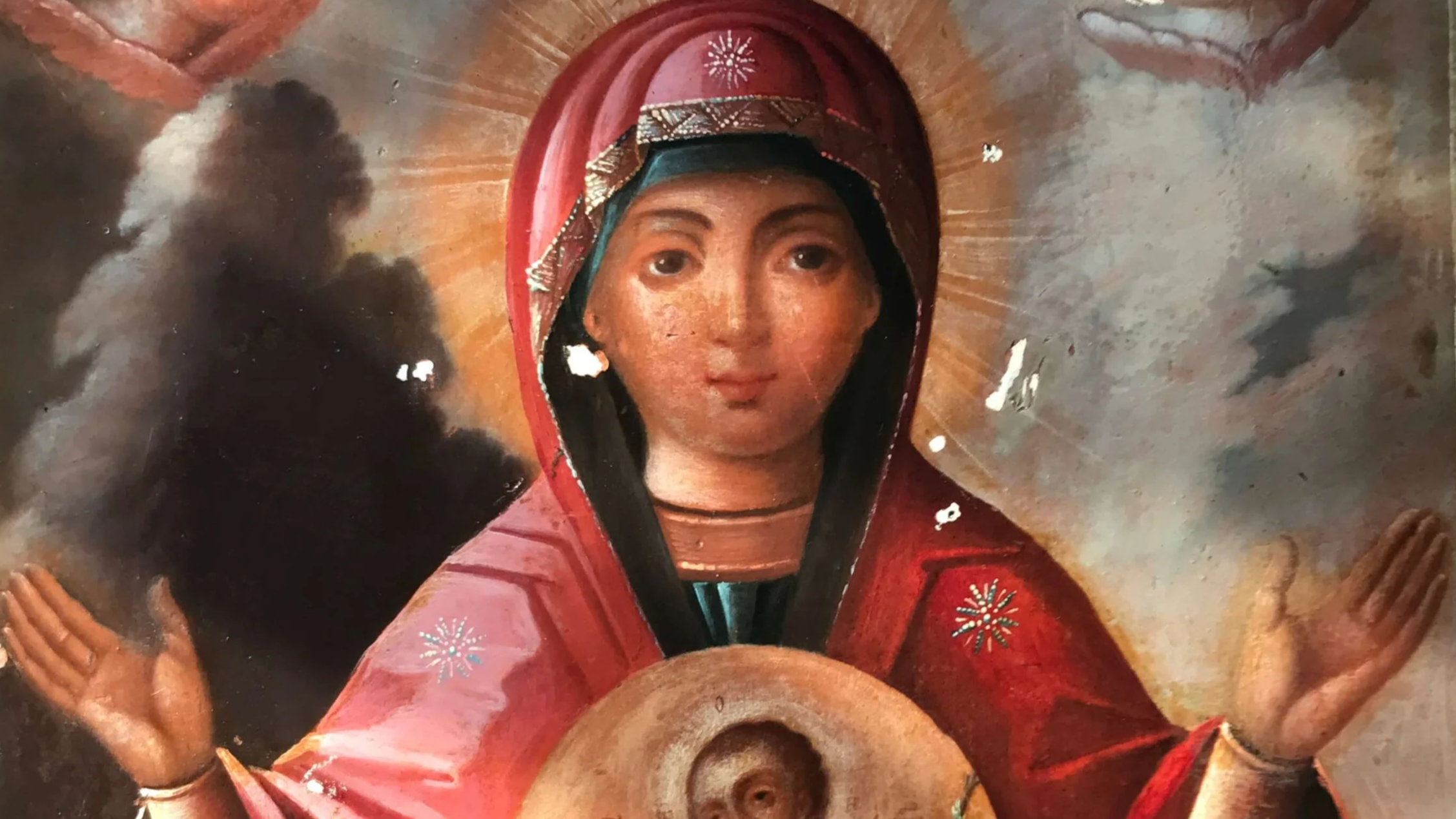
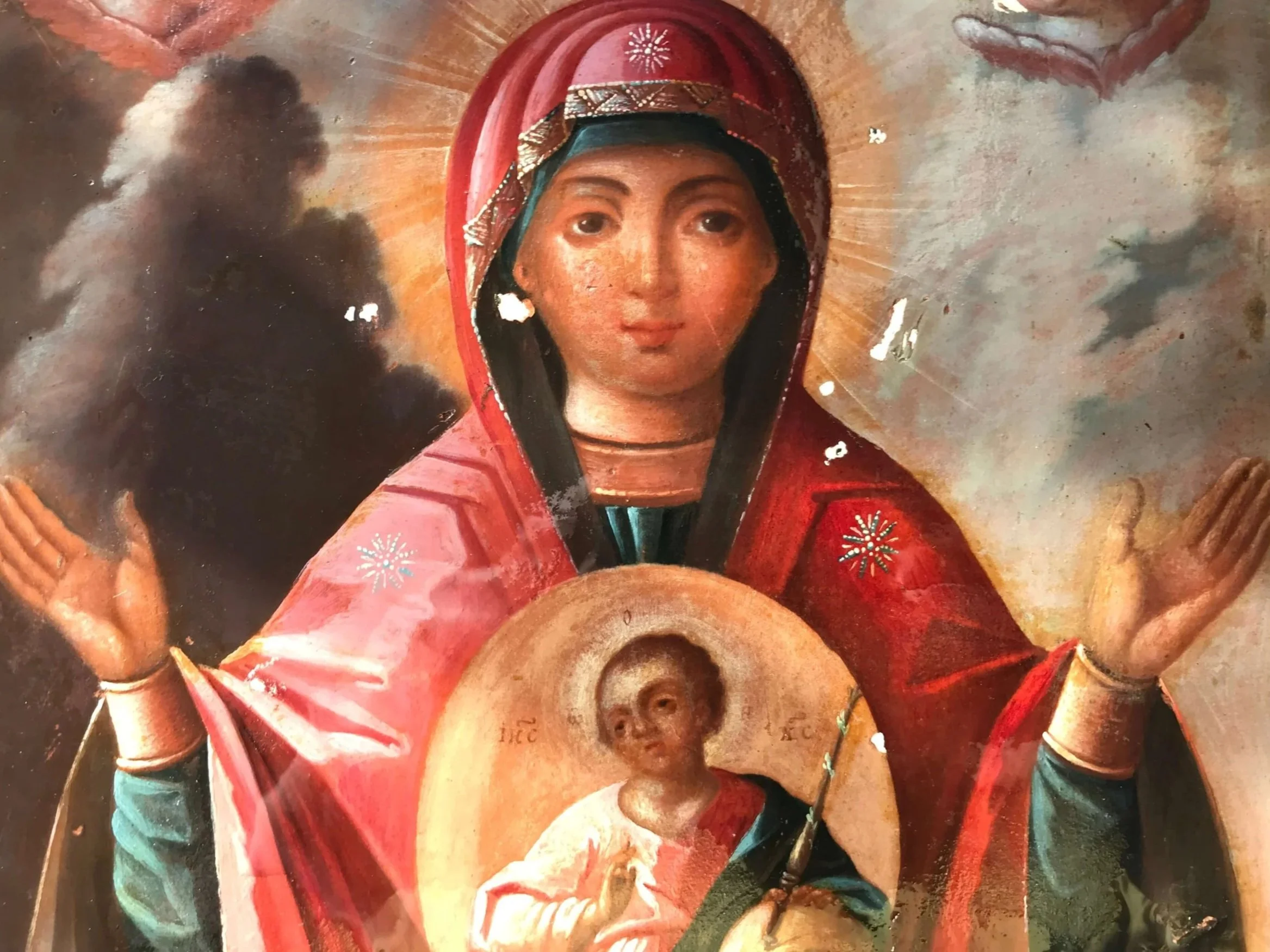
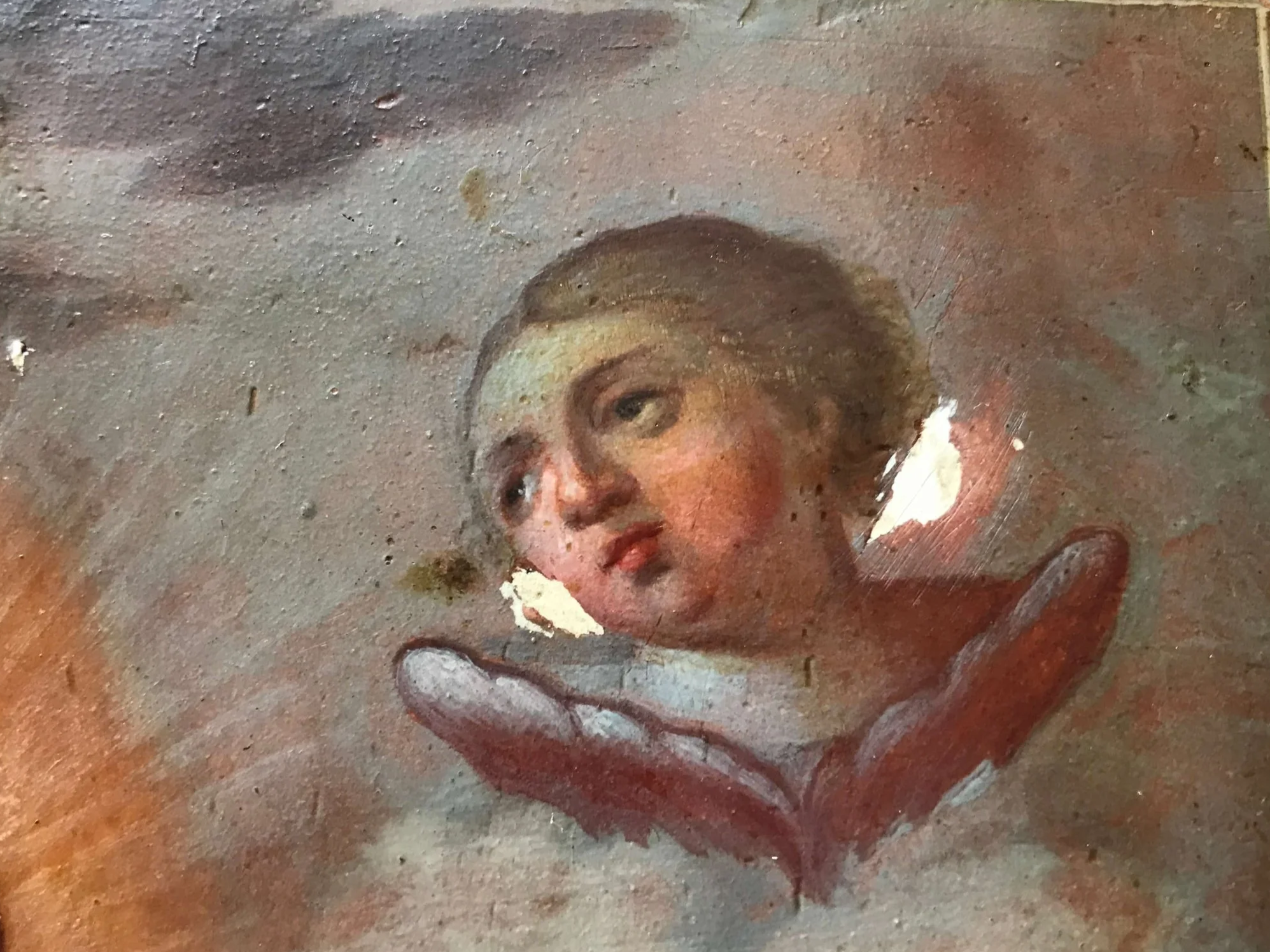
In the twilight of the nineteenth century, an iconographer painted this sacred icon known in Russian as “Знамение Пресвятой Богородицы” or in English, “The Icon of the Mother of God “The Sign””.
According to ancient tradition, this image reveals the miracle prophecy by Isaiah: The Lord will give you a sign: a Virgin shall conceive and bear a Son (Isaiah 7:14). The Mother of God stands in prayer, her hands raised, the Christ-Child shining in a round mandorla upon her breast - the eternal mystery of God becoming man.
Yet this particular icon carries two secrets that make it unlike any other.
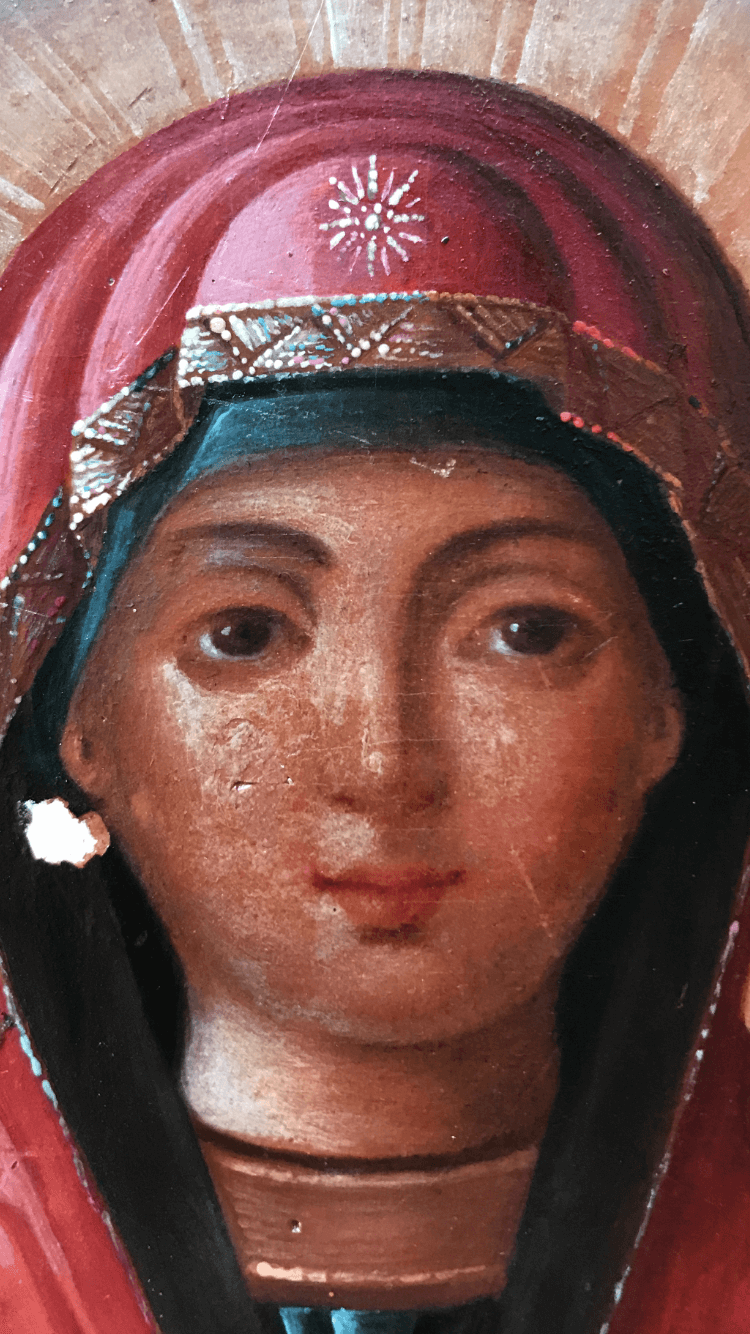
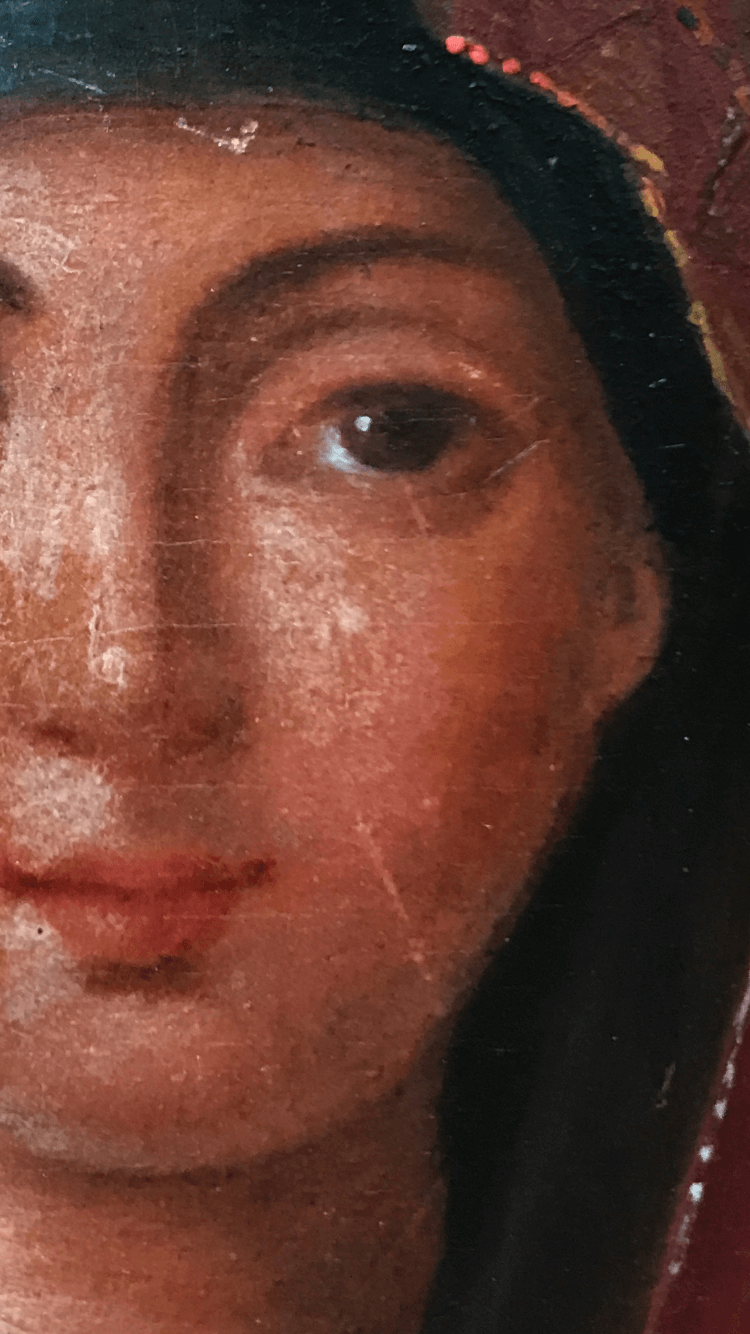
The first is her SMILE.
Traditionally, a smile on the face of the Mother of God is very rare in iconography, because she is usually depicted in sorrow, as one who already knows the fate that awaits her Son, Jesus.
Smile on this icon is subtle, almost luminous - a quiet, tender smile reminiscent of the Gioconda by Leonardo Da Vinci and of the beloved Bethlehem Icon of the Mother of God, where the very young Mary, barely more than a child herself, is said to smile in innocent wonder at the birth of her Son.
Here too, on this nineteenth-century panel, the Mother of God appears to smile not with earthly emotion, but with a serene and mystical joy - a joy that seems to rise from a place beyond time, as though she beheld both the sorrow and the triumph of her Child and embraced them both with love.
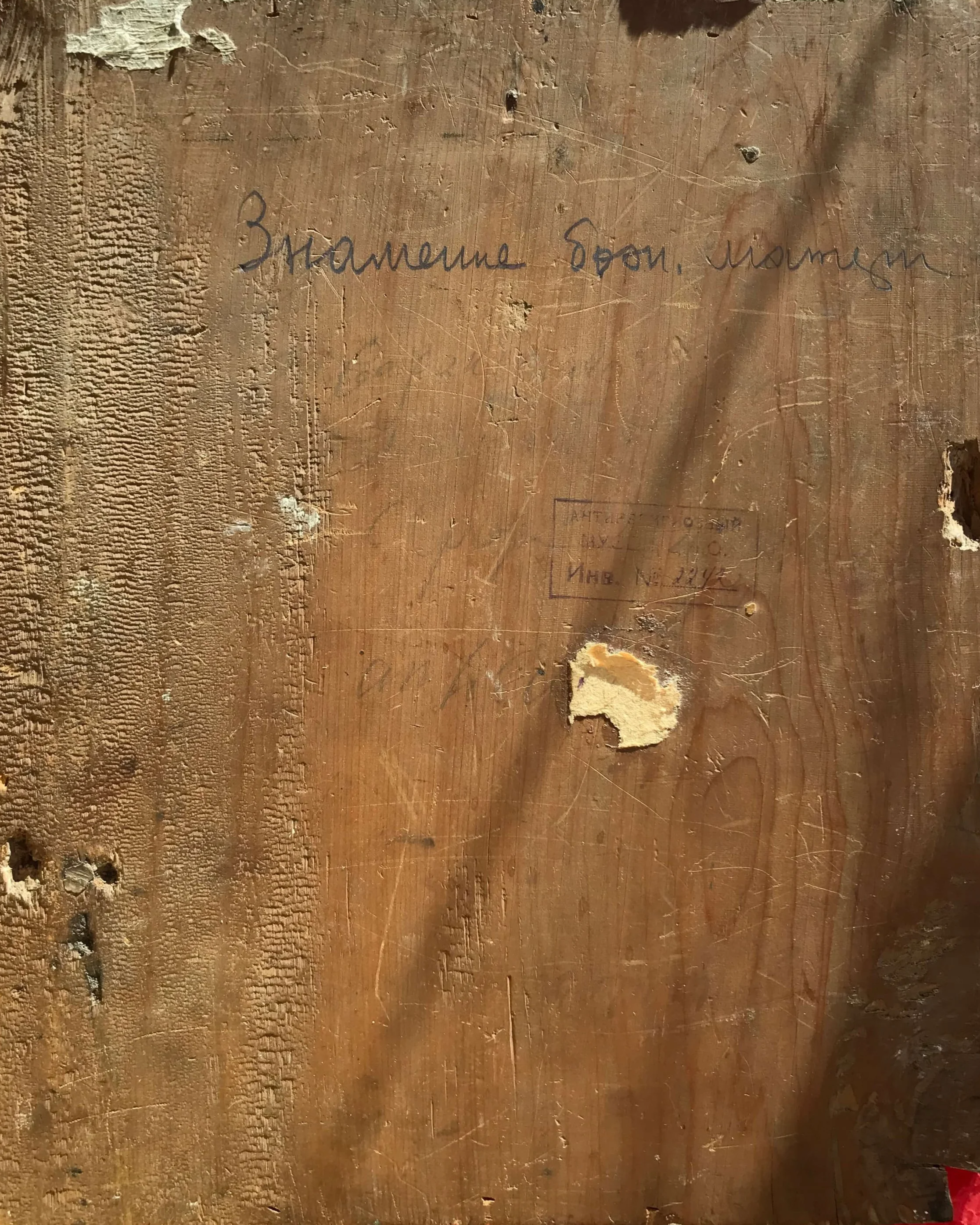
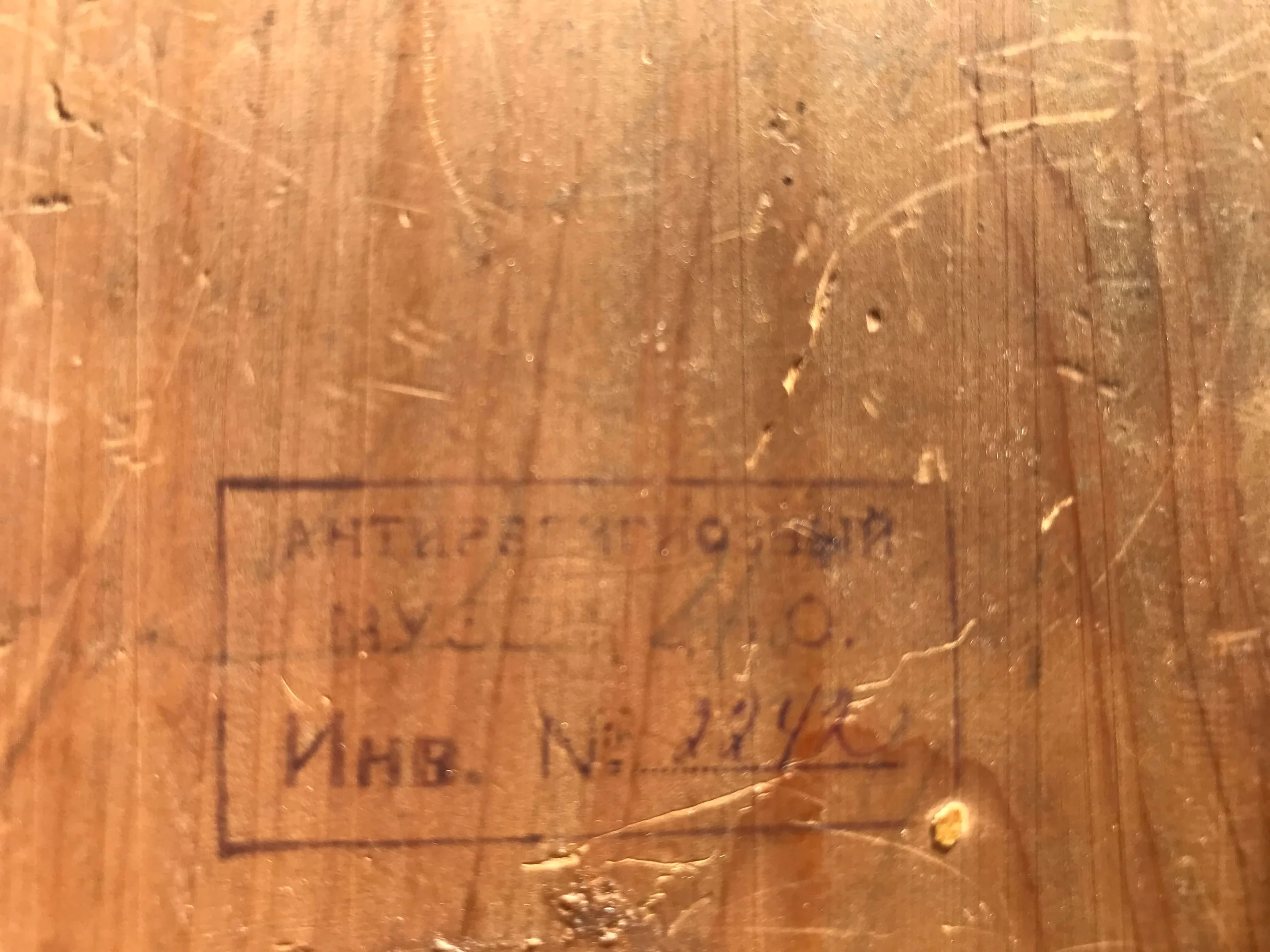
The second secret lies not on the face, but on the back of the icon. There, stamped in ink, are the words, which disclose some of its PROVENANCE:
“Anti-Religious Museum. Inventory No. 2242.”
(Russian: “Антирелигиозный Музей. Инвентарный № 2242.”)
During the Soviet era, when many churches became museums of atheism rather than houses of prayer, sacred objects were gathered, catalogued, stored and displayed not to inspire faith, but to diminish it. The Kazan Cathedral in Leningrad, the great Isaac’s Cathedral and countless others shared this fate - their domes echoing not with hymns but with lectures against belief.
And yet, in the Anti-Religious Museum this icon remained - quiet, patient and unbroken - kept alive by the very institution that sought to deny her meaning.
Her mysterious smile endured through the years of silence, waiting for the moment when reverence would return, when human hearts would soften again and remember the ancient sign of hope she carried.
Thus, the Icon of the Mother of God “The Sign” becomes not only a symbol of the Incarnation, but also a witness to history:
+ a gentle smile preserved through storms,
+ a light hidden yet unextinguished,
+ a reminder that the sacred - even when suppressed - continues to live.
The provenance of this icon is also intertwined with the story of Saint Theodosius of Chernigov in a way that is both mysterious and deeply moving. But that tale will unfold on this site in its own time.